About me

Dr. med. Sebastian Romann

Physician in cardiometabolic prevention. Trained in cardiology at Heidelberg University Hospital, scientifically at home in biomarker-based risk stratification — and convinced that the decisive years are the ones before the disease.

“Most cardiovascular disease develops over decades — and it announces itself long before symptoms appear. Those are the years I want to use.”

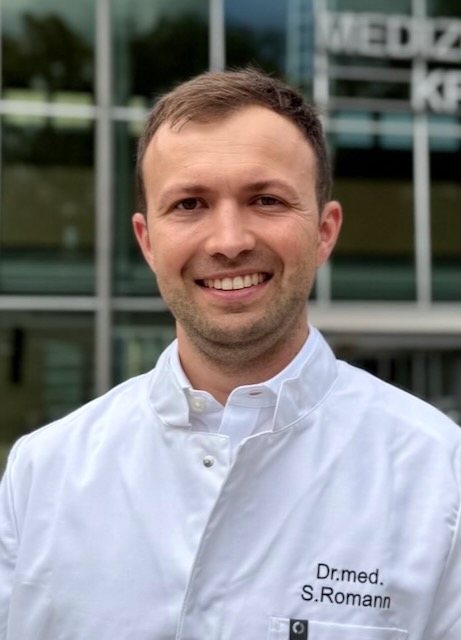
Portrait of Dr. med. Sebastian Romann

My approach

Since 2015 I have been at Heidelberg University Hospital — first as a student, then as a resident physician in cardiology — meeting people whose heart disease had already become manifest: in intensive care, in the chest pain unit, in patients with ventricular assist devices or after transplantation. What occupied me most was not the acute course — it was the history behind it. Elevated values known for years. A risk profile no one had ever brought together systematically. Time that had been available.

In parallel, since 2018 I have been investigating within the cardio-oncology research group (AG Lehmann) how cardiovascular risk can be measured before it becomes clinically visible, using biomarkers such as high-sensitivity troponin. From that combination came my professional conviction: risk can be recognised early, assessed in a differentiated way and treated in a targeted manner — provided there is time for it and the findings are considered as a whole.

That is precisely why this practice exists. For a structured, individually indicated assessment of cardiometabolic risk — in a setting that allows for a thorough conversation, careful diagnostics and a comprehensible interpretation of the results.

What this means in practice

Time as a prerequisite

A sound risk assessment requires history, findings and conversation — not seven minutes.

Findings you understand

After the appointment you should know what your values mean and how progress can be measured.

Individual indication

What is examined is what is medically justified in your situation — not a standard programme.

Continuity of care

Prevention works over time. Follow-up is therefore part of the concept, not the exception.

Clinical career

  • since 04/2025
    Kardiologie am Bodensee, SingenPhysician in specialist training, cardiology
  • 04/2025 – 01/2026
    MVZ PI GmbH, Singen and Rielasingen-WorblingenPhysician in specialist training, general medicine
  • 02/2021 – 03/2025
    Heidelberg University Hospital — Department of CardiologyResident physician. Rotations: cardiology outpatient clinic, echocardiography, specialist cardio-oncology clinic, inpatient ward including LVAD and heart transplantation, intensive care unit, chest pain unit.

Education and doctorate

  • 2019 – 2025
    Doctorate (Dr. med.)Lehmann research group, Heidelberg University Hospital — “Cardiac comorbidities as predictors of mortality in oncological patients”.
  • 2013 – 2021
    Heidelberg UniversityHuman medicine; medical licence (Approbation) granted December 2020.
  • 2019 – 2020
    Final clinical yearHeidelberg University Hospital (cardiology and haematology, psychosomatic medicine), Krankenhaus Bergstraße (surgery).
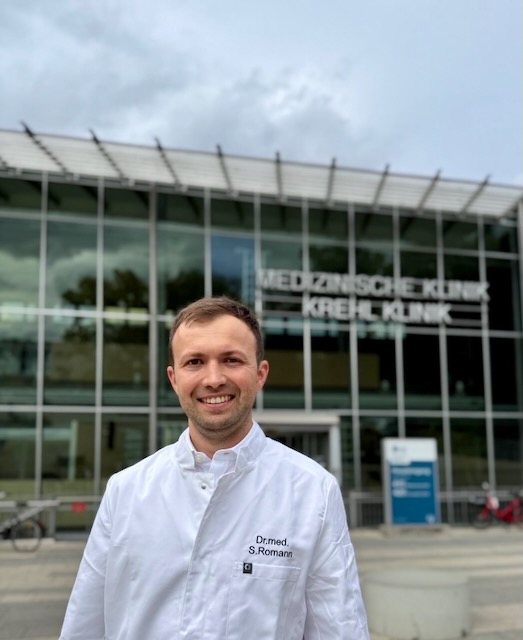
Dr. med. Sebastian Romann outside the Department of Internal Medicine, Heidelberg University Hospital
Krehl Clinic, Heidelberg University Hospital

Clinical focus

  • Cardiovascular risk stratification
  • Lipid management including lipoprotein(a)
  • Cardiometabolic medicine: vessel wall, endothelium, metabolism
  • Non-invasive cardiac diagnostics
  • Echocardiography and exercise testing
  • Cardio-oncology
  • Biomarker-based follow-up assessment
  • Structured preventive counselling

Research

Since 2018 my research within the cardio-oncology group of Prof. Dr Lorenz Lehmann has addressed biomarker-based cardiovascular risk stratification. The central question is what cardiac biomarkers — above all high-sensitivity troponin T — can tell us about the prognosis of people who have no cardiac symptoms yet. This work was conducted within the Heidelberg Cardio-Oncology Registry (HEartCORE) and published in international peer-reviewed journals.

Since 2020 I have also worked as a study physician within the KKS network. In addition, I collaborate on an international research project with the Lithuanian University of Health Sciences in Kaunas.

Young Investigator Award of the German Cardiac Society (DGK) — Annual Meeting 2020, Berlin.

risk-strat.de — a freely accessible online tool I developed for cardiovascular risk stratification in oncological patients. risk-strat.de

Publications and conference contributions

A complete overview of the scientific work I have authored and co-authored.

Show full list

Original and review articles

2026Brauer J, Romann SW et al. Cardiotoxic effects of BRAF/MEK inhibition: An observational study. Eur J Cancer. 2026;233:116182. doi:10.1016/j.ejca.2025.116182
2026Brauer J, Romann SW et al. Prevalence of obstructive coronary artery disease in asymptomatic cancer patients with elevated troponin levels. Cardiooncology. 2026;12(1):15. doi:10.1186/s40959-025-00432-4
2025Mamedov A et al. Mitochondrial respiratory pathways in immature rat heart tissue using different cardioplegic solutions. Gen Thorac Cardiovasc Surg. 2025;73(7):479–486. doi:10.1007/s11748-024-02097-9
2024Romann SW et al. Troponin Elevation in Asymptomatic Cancer Patients: Unveiling Connections and Clinical Implications. Curr Heart Fail Rep. 2024. doi:10.1007/s11897-024-00681-x
2024Romann SW et al. The Cardio-Oncology Guideline — A Comprehensive Approach to Managing Cardiovascular Risks in Cancer Patients. Dtsch Med Wochenschr. 2024;149(12):719–723 (in German). doi:10.1055/a-2104-6363
2024Korell F et al. Evaluation of all-cause mortality and cardiovascular safety in patients receiving chimeric antigen receptor T cell therapy: a prospective cohort study. EClinicalMedicine. 2024;69:102504. doi:10.1016/j.eclinm.2024.102504
2023Romann S et al. Cardiological parameters predict mortality and cardiotoxicity in oncological patients. ESC Heart Fail. 2024;11(1):366–377. doi:10.1002/ehf2.14587
2021Finke D, Romann S et al. High-sensitivity cardiac troponin T determines all-cause mortality in cancer patients: a single-centre cohort study. ESC Heart Fail. 2021;8(5):3709–3719. doi:10.1002/ehf2.13515

Conference contributions

2025Dörr M, Entenmann L, Romann S et al. Risk stratification for cardiac events based on high sensitive cardiac troponin T (hs-cTnT) for cardio-oncologic patients. DGK Mannheim. Clin Res Cardiol 2025. doi:10.1007/s00392-025-02625-4
2025Stengele C, Romann S et al. Incidence of CAD in asymptomatic cancer patients with elevated troponin. DGK Mannheim. Clin Res Cardiol 2025. doi:10.1007/s00392-025-02625-4
2024Romann S et al. Risk stratification according to the ESC Cardio Oncology Guideline 2022 and its impact on patient care. DGK Mannheim. Clin Res Cardiol 2024. doi:10.1007/s00392-024-02406-5
2023Romann S et al. Cardiac biomarker associate with all-cause mortality in cancer patients. DGK Mannheim. Clin Res Cardiol 2023. doi:10.1007/s00392-023-02180-w
2022Romann S et al. Cardiac biomarker associate with all-cause mortality in cancer patients — data from the Heidelberg Cardio-Oncology Registry (HEartCORE). DGK Mannheim. Clin Res Cardiol 2022. doi:10.1007/s00392-022-02002-5
2021Romann S et al. Risk stratification in cancer patients. COIN Conference, USA, December 2021.
2020Romann S et al. Serotonin levels in NET patients are related to cardiac biomarkers and function. Clin Res Cardiol 109, Suppl 1, 2020 — abstract V689. doi:10.1007/s00392-020-01621-0

Memberships, languages, personal

Membership
German Cardiac Society (DGK), since 2020
Qualification
Certified Data Protection Officer (TÜV), since 2024
Languages
German (native), English (fluent)
Basic knowledge
French, Lithuanian

Raised in the Saarland, shaped as a physician in Heidelberg, and since 2025 at home with my family on Lake Constance.

Beyond medicine, I have long been occupied by the question of how medical data can be prepared so that it genuinely helps in conversation. That inclination produced the risk-strat.de calculator and several analysis tools for our research work.

Let us meet

The first step is a thorough conversation — about your history, your existing findings and which diagnostics make sense in your situation.

Request an appointment

The information on this page describes the career and professional focus of the practice owner. It does not constitute individual medical advice and does not imply any assurance of a particular treatment outcome. The nature and scope of every medical service depend on the individual medical indication; billing follows the German Scale of Fees for Physicians (GOÄ). This English version is a courtesy translation; the German version prevails.